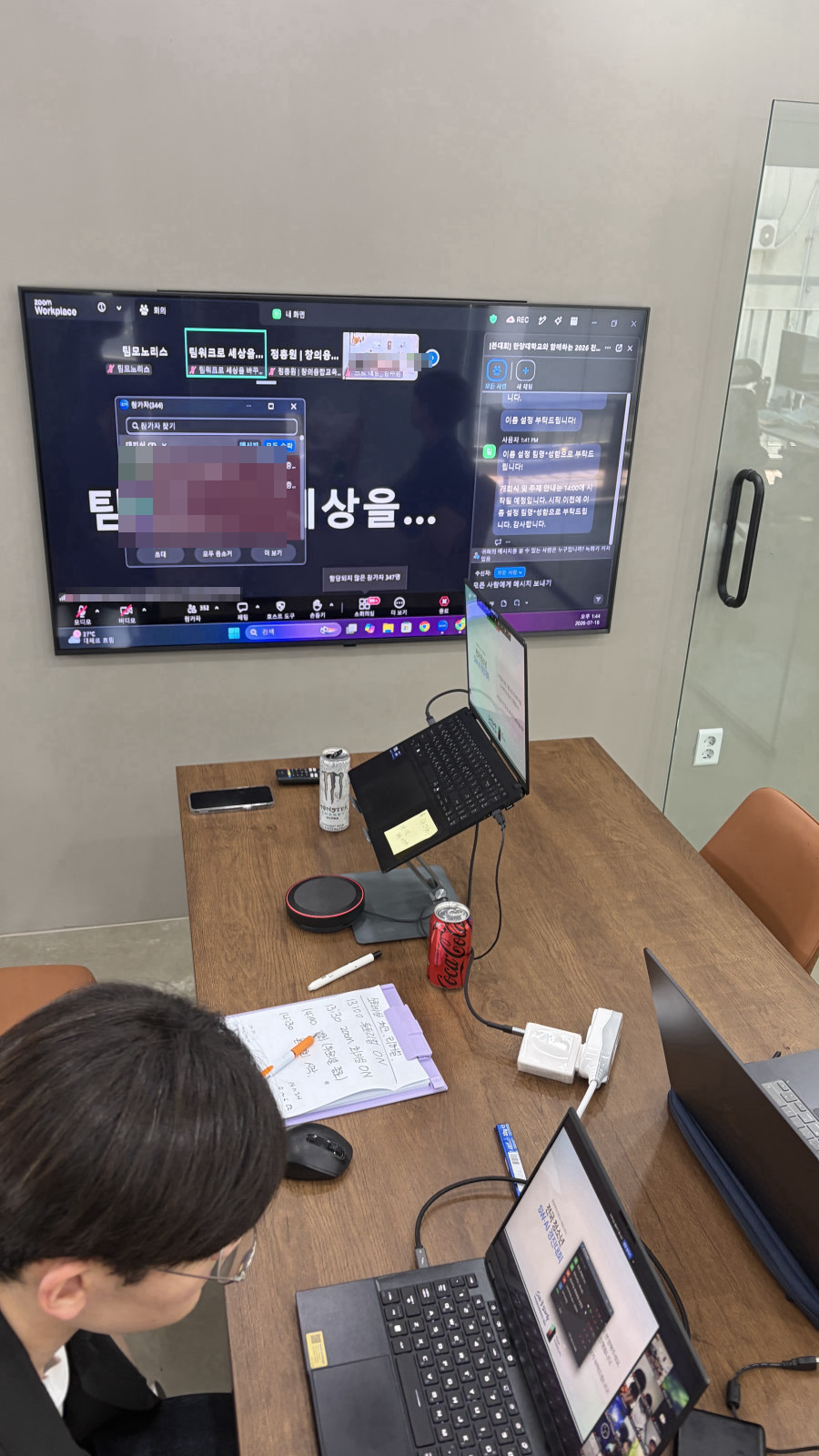
Staff in the control room watching the online hackathon’s progress on a large screen

Hanyang ERICA National Youth SW·AI Competition2,000 students
started building
at the same moment.

Hanyang University ERICA hosted it, and more than 2,000 students gathered from 14 provinces and metropolitan cities.
At 2:30pm, when the topics were revealed, every one of them started building at once.
Bana ran the whole thing from a single screen.

Host
Hanyang University ERICA
Date
Jul 18–19Two days, one night · online
Participants
~0 studentsFrom all 14 provinces and metropolitan cities
Completed
~0 teamsfinished after an all-nighter
Run by
BanaRan the competition end to end
Overview

Four months from recruiting to results, 20 overnight hours of building

Bana ran the 2026 National Youth SW·AI Competition hosted by Hanyang University ERICA. Over four months, from the recruitment call in late March to the results announcement on July 27, more than 2,000 students from over 600 schools across 14 provinces and metropolitan cities took part.

In the pre-training on July 4, students learned AI literacy, prompting, and vibe coding. At the opening ceremony at 14:00 on July 18, 4 SDG themes and 8 specific topics were revealed. Participants built online overnight for 20 hours, with mentor breakout rooms open throughout. Work was submitted by 10:30 on July 19.

Submissions went through three rounds of judging, an AI pre-review, expert scoring, and a final review, and 13 winning teams were selected on July 27. More than 600 teams completed their work, and the entries can be browsed in the Bana gallery.

Host
Hanyang University ERICA
Date
Saturday, July 18 to Sunday, July 19, 2026 · online, overnight
Participants
More than 2,000 students from 14 provinces and metropolitan cities
Format
Pre-training, 20-hour overnight build, and 3 rounds of judging
Topic
Social problem solving based on the UN SDGs · 1 of 8 topics
Run by
Bana, in charge of running the competition
Schedule
Theme · Solving social problems through the UN SDGs

From nationwide recruiting to the results,
we ran four whole months of it.

Everything ran online, from the call for entries in late March to the results in late July.
Wherever a student lived and whatever school they attended, they took part on the same terms.

Late Mar – early Jul

Recruiting entrants

More than 600 schools nationwide · more than 2,000 students

Jul 4

Pre-training

AI literacy, prompting, vibe coding (live + recorded)

Jul 18, 14:00

Opening ceremony · topics revealed

4 SDG themes and 8 sub-topics, revealed on the day

Jul 18 → 19

Overnight build

20 hours, mentor breakout rooms open throughout

Jul 19, 10:30

Submission

Report · intro video · source code

Jul 20–26

Three-stage judging

AI pre-screening → expert scoring → final review

Jul 27

Results announced

13 winning teams selected

The theme of this competition
“Solving social problems through the UN SDGs: choose 1 of 8 topics”

Digital exclusion among older adults, the climate crisis and wasted resources, getting around with reduced mobility, teenage health.
Social problems with no right answer, revealed on the day, and teams across the country each picked one and answered it with a web or mobile app.

What this competition showed
Judged on the problem-solving process · using and verifying generative AI · team collaboration
Entries from across the country

Apps built by teams across the country,
open them yourself.

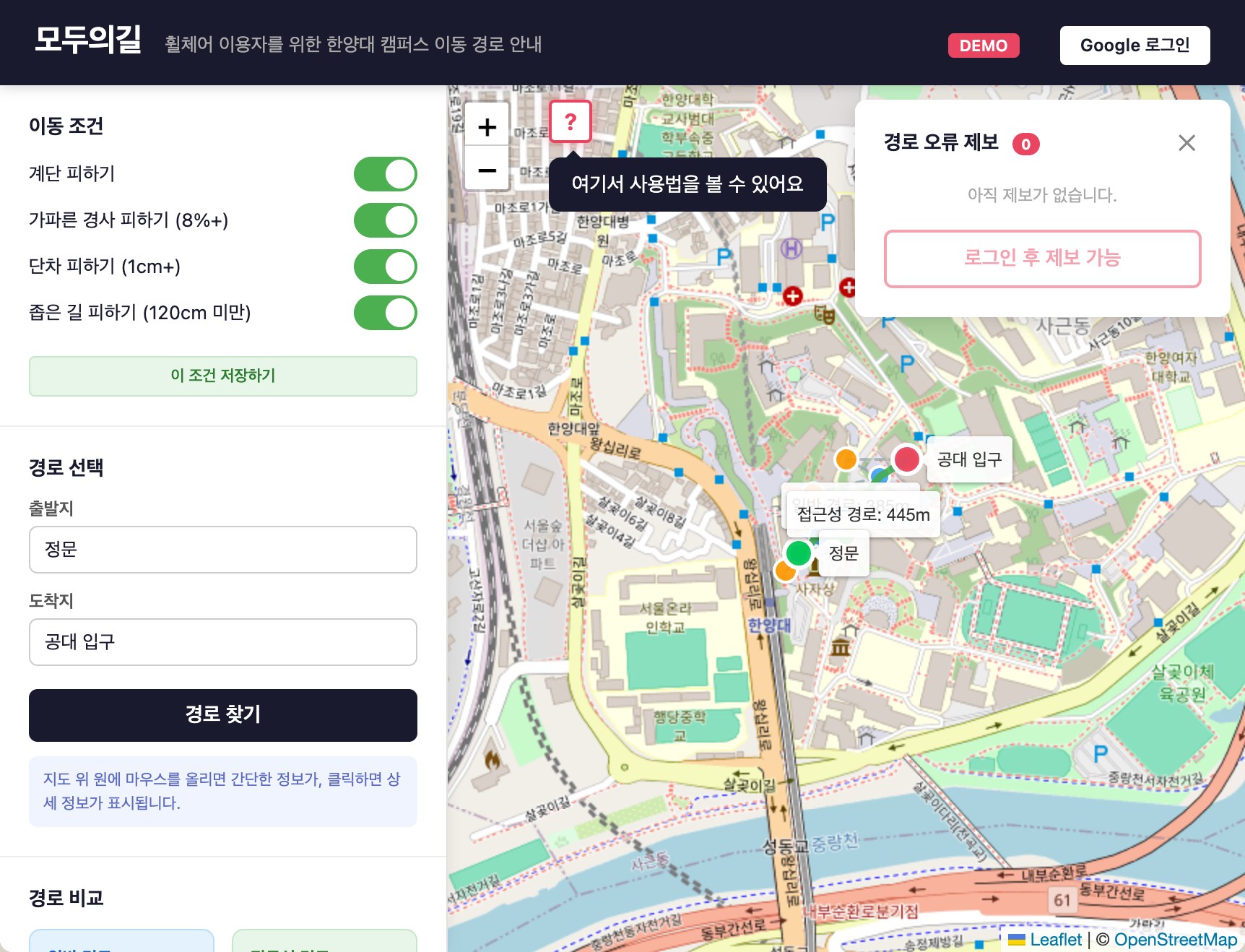
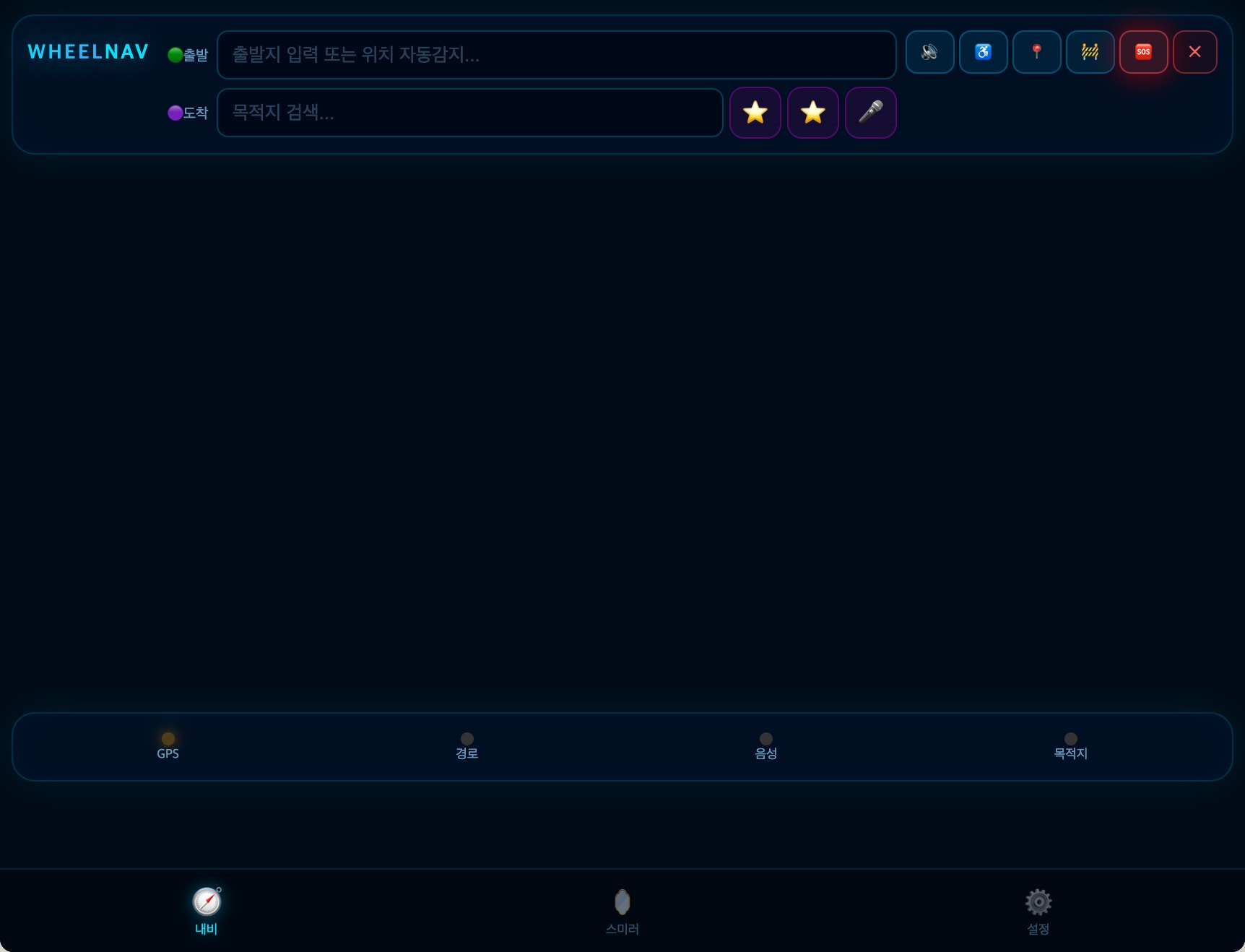
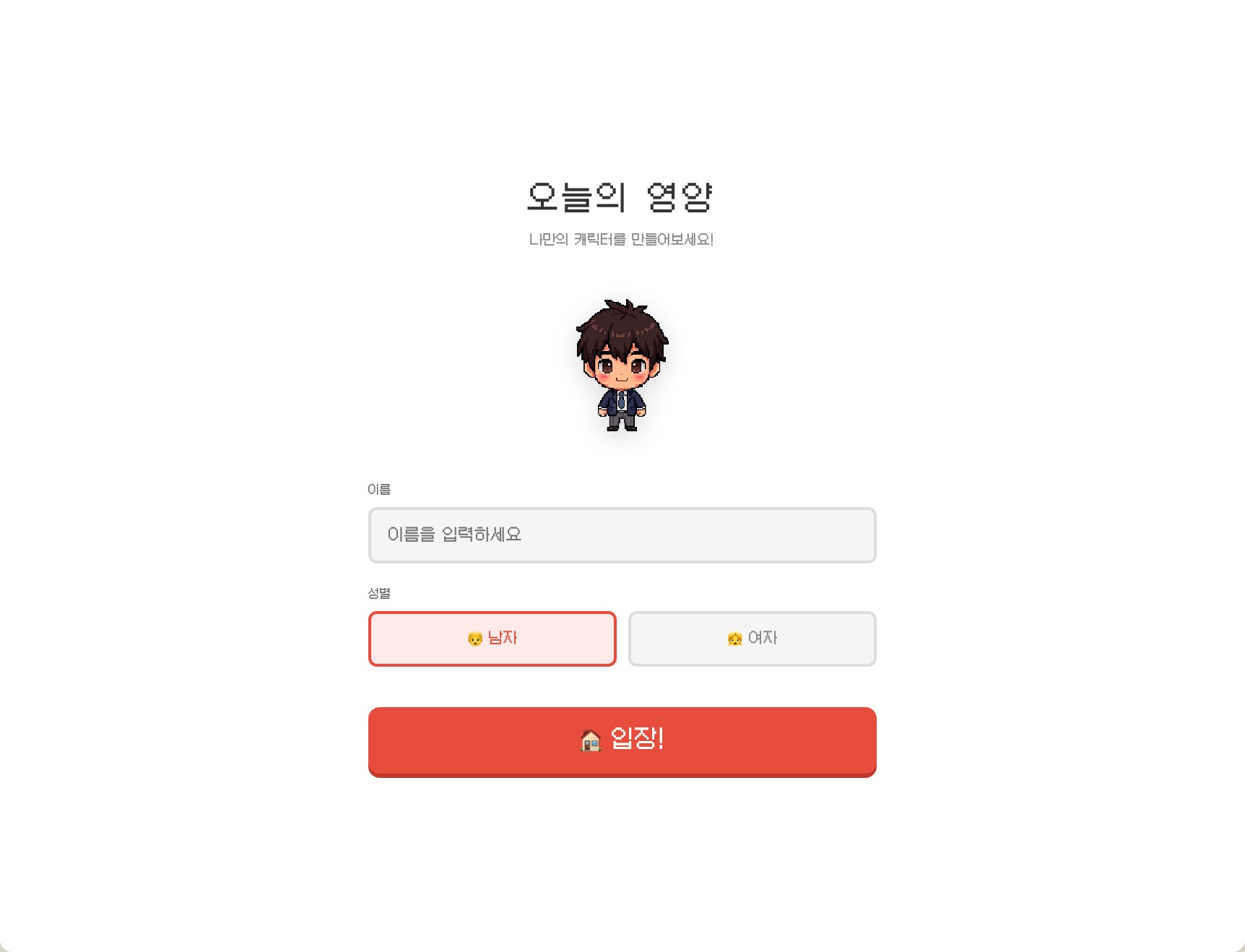
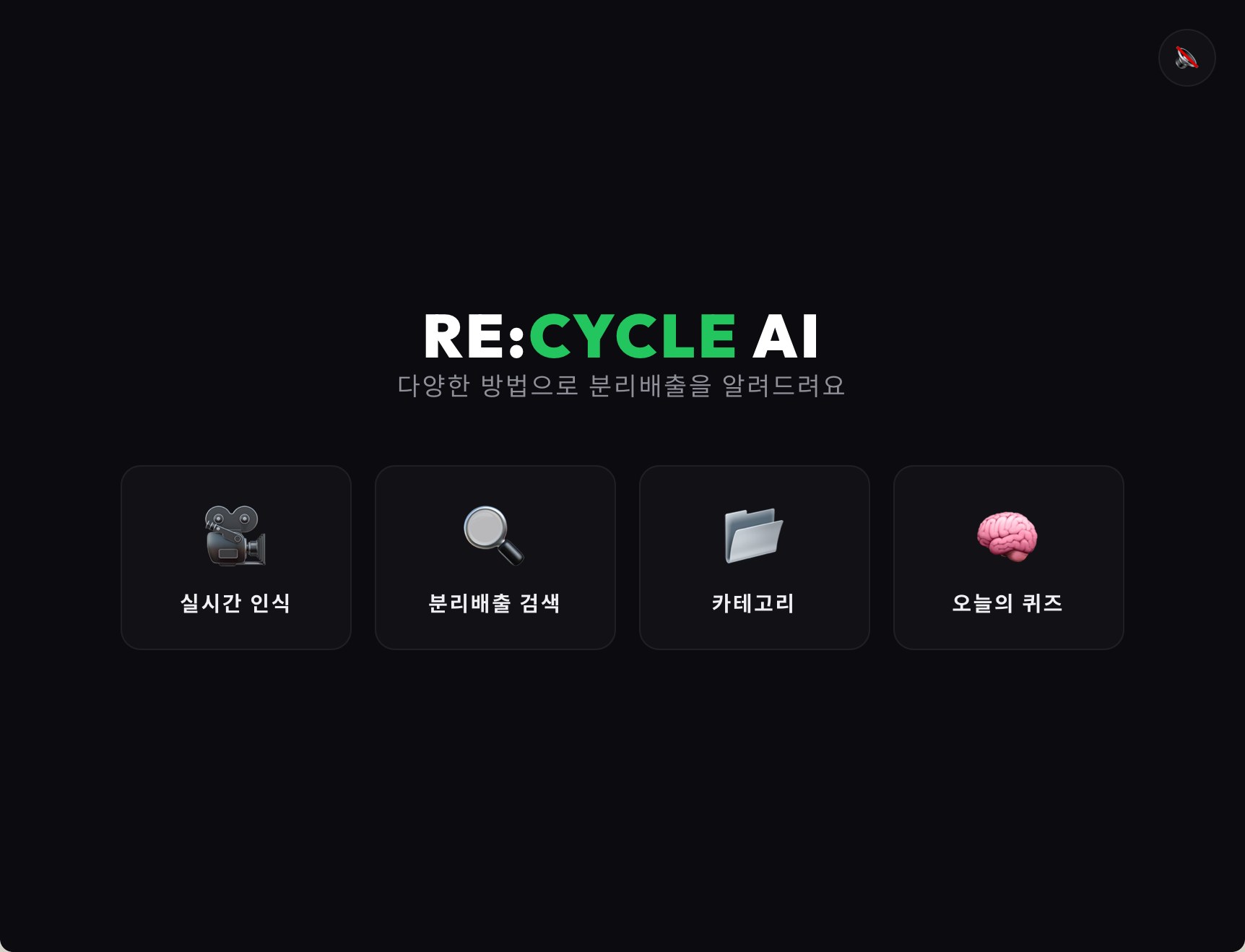
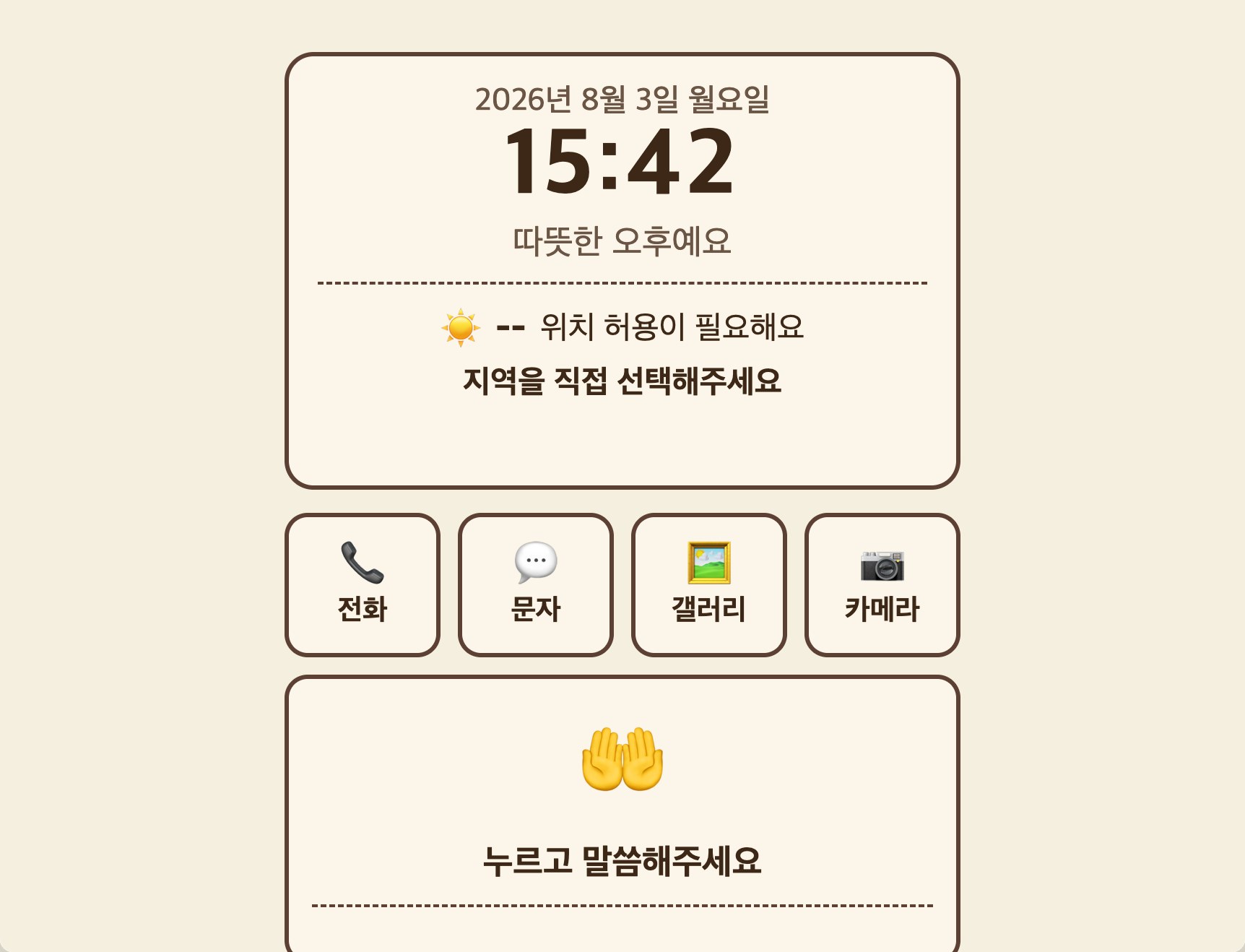
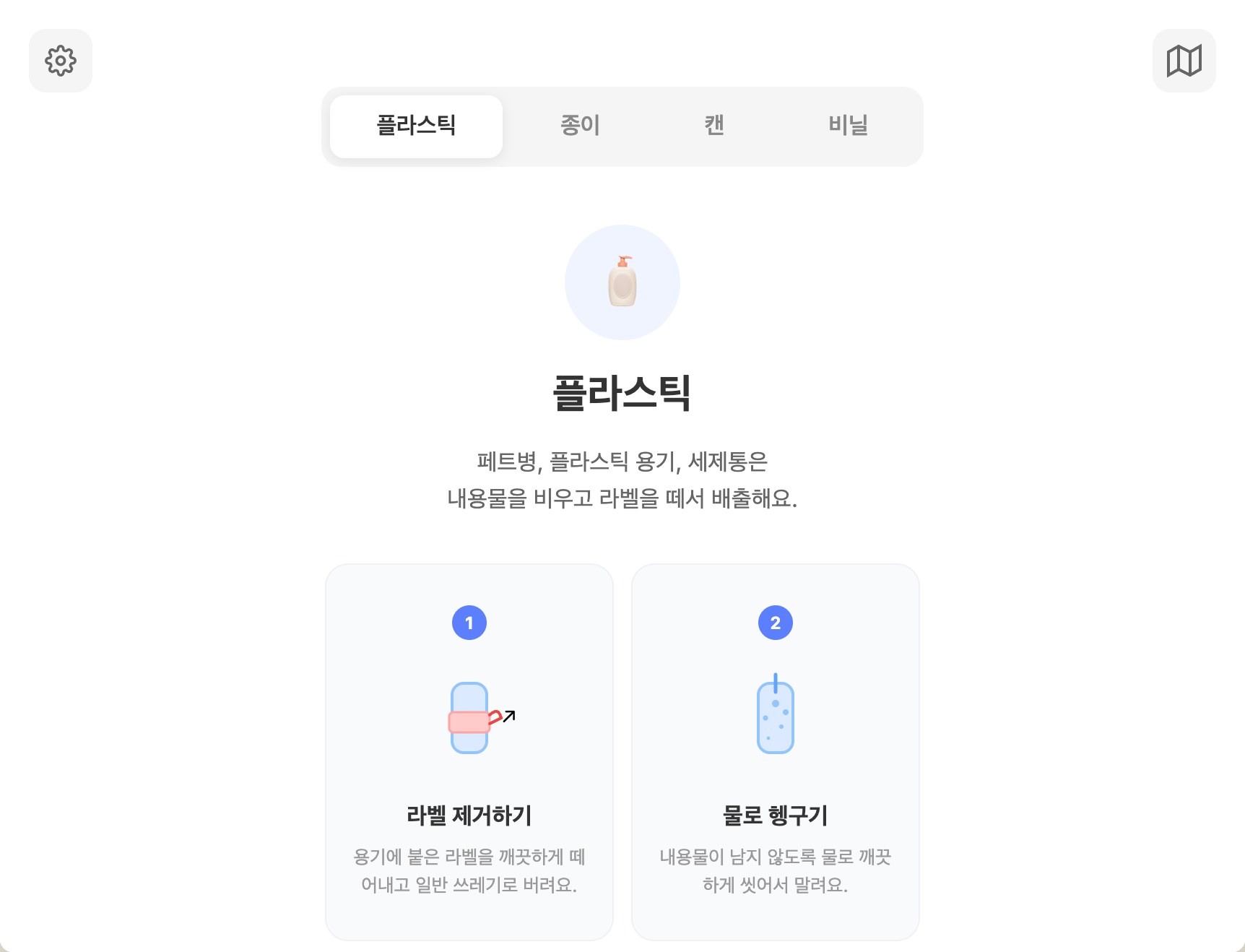
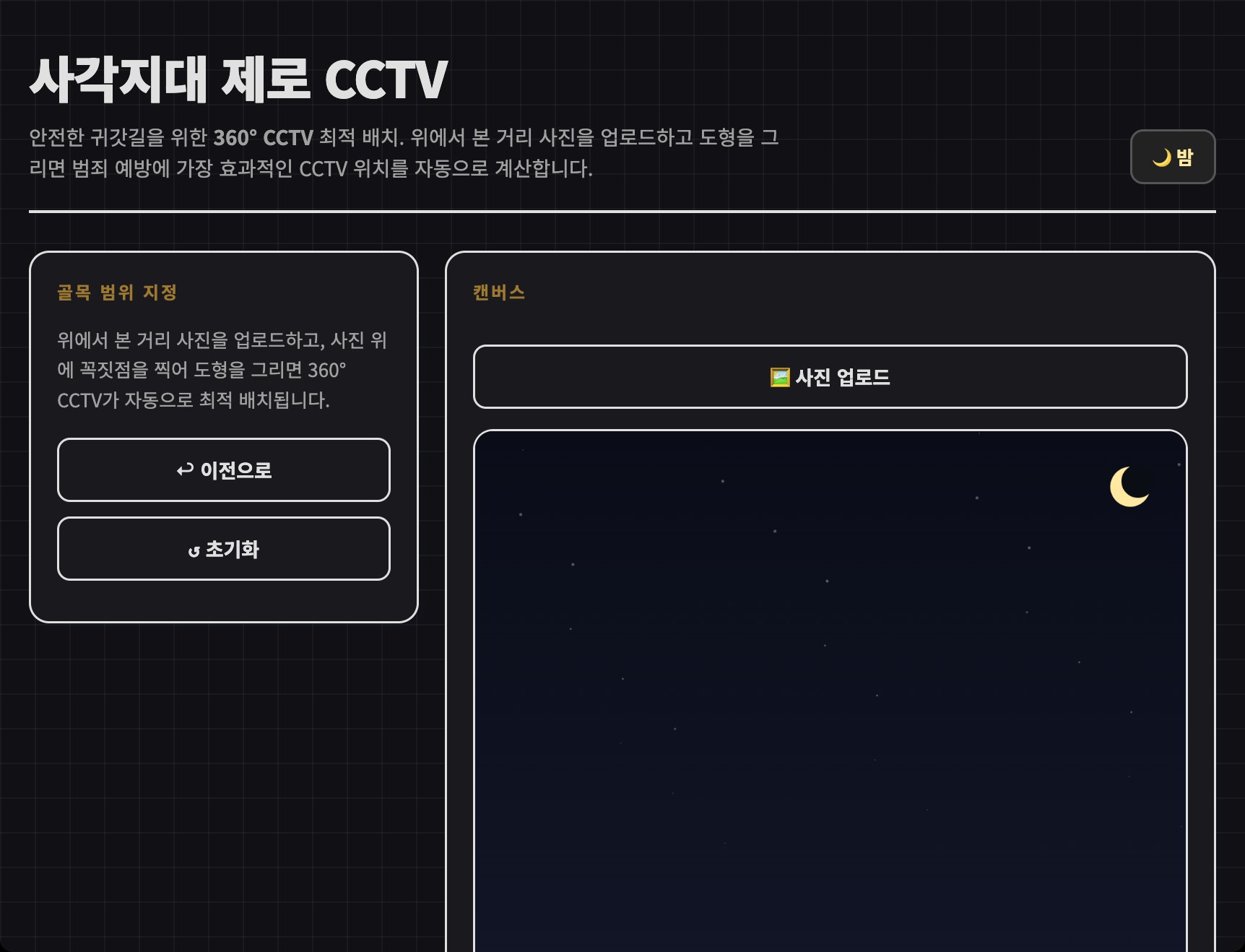
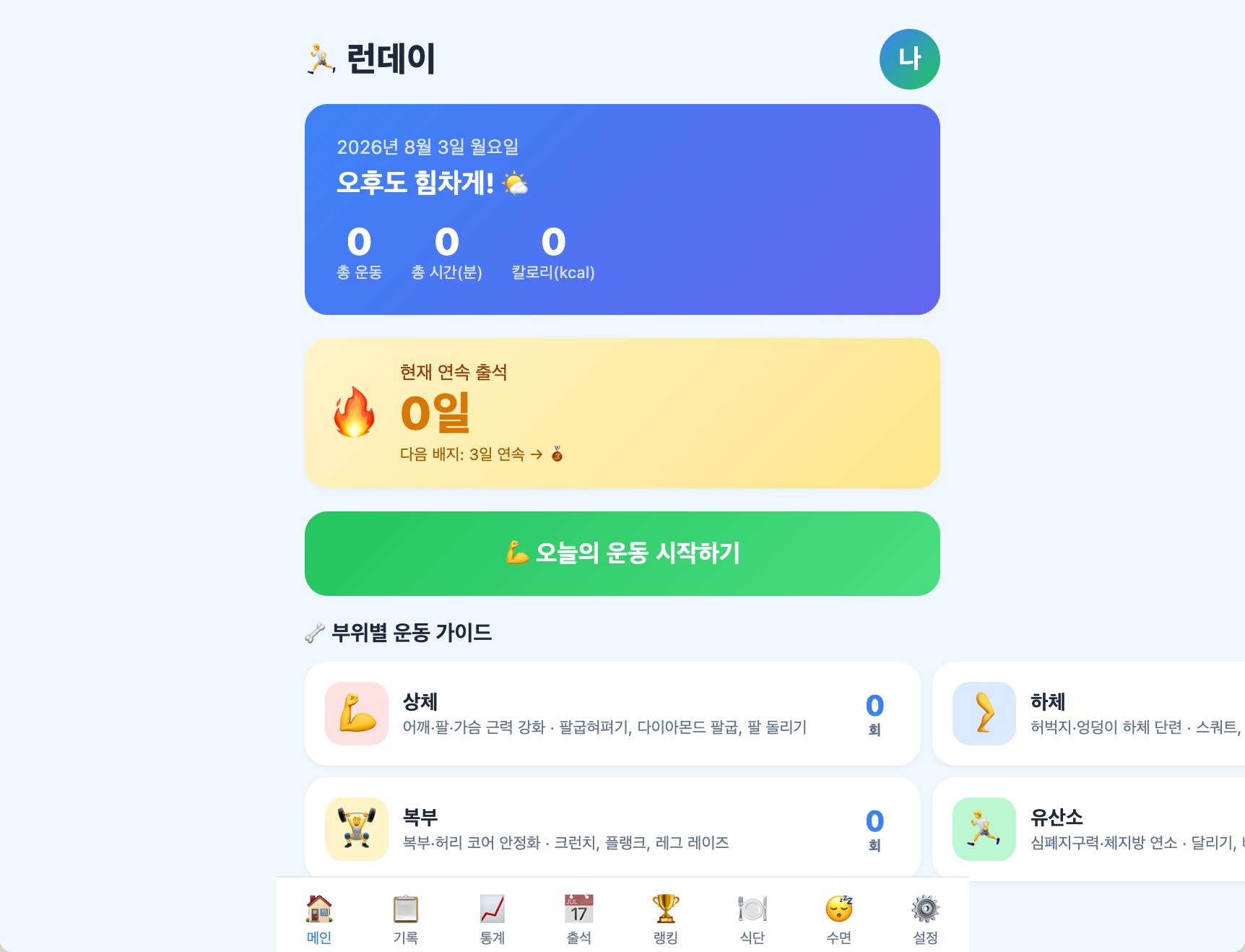
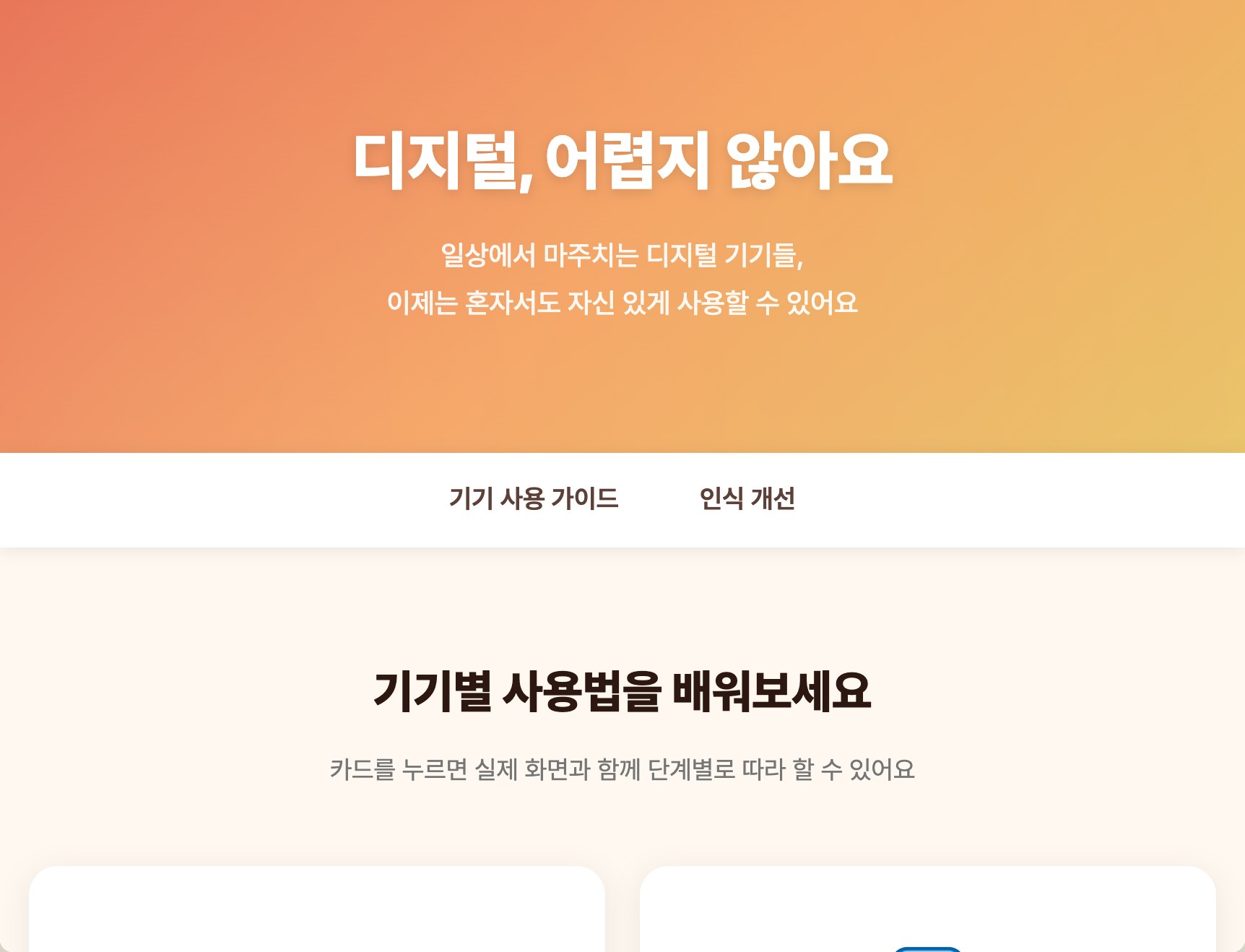
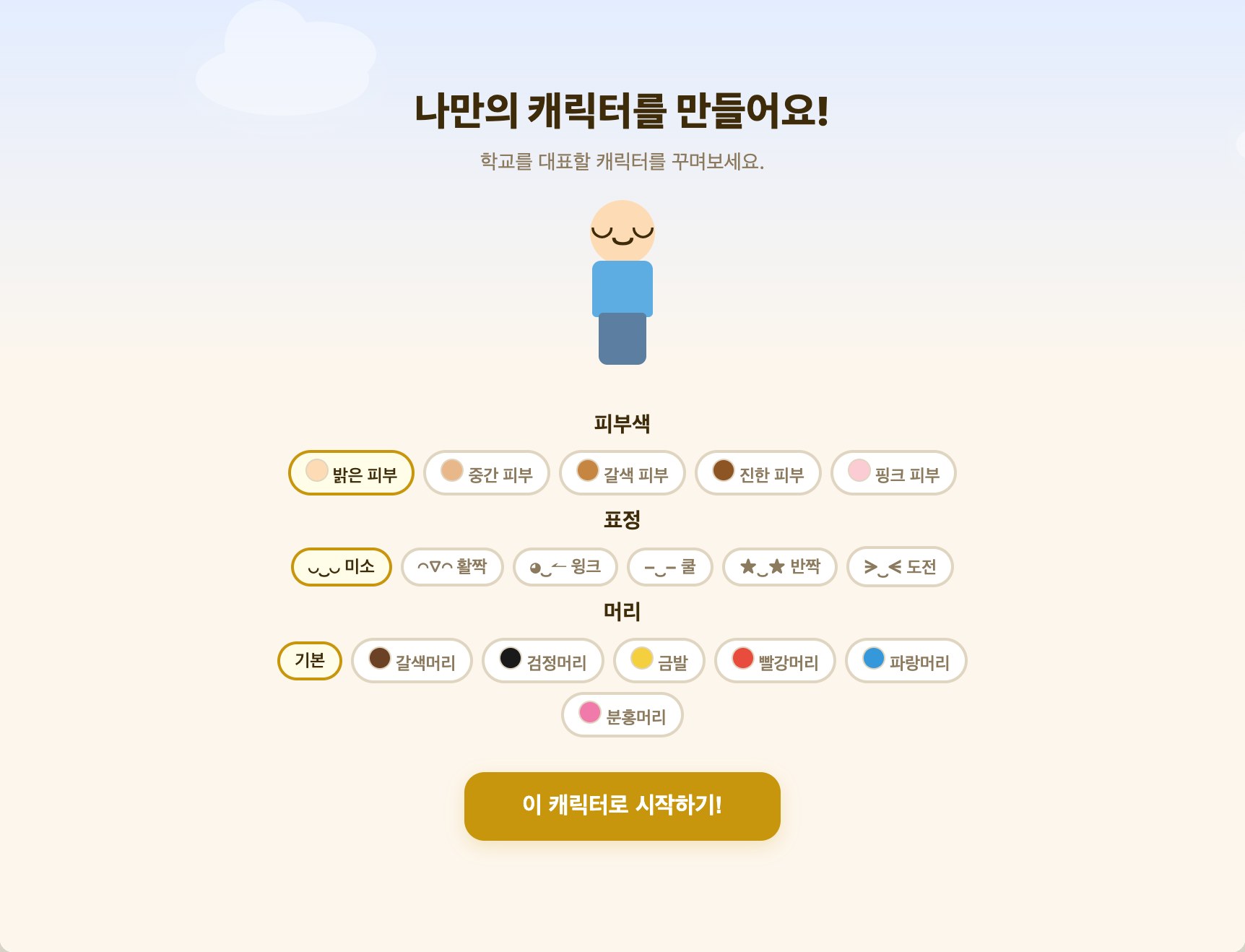
These are the projects teams from around the country built on Bana and published to the gallery.
Click a card to see the real screen up close.

모두의 길
1 student
WheelNav Pro
1 student
오늘의 영양
2 students
RE:CYCLE AI
1 student
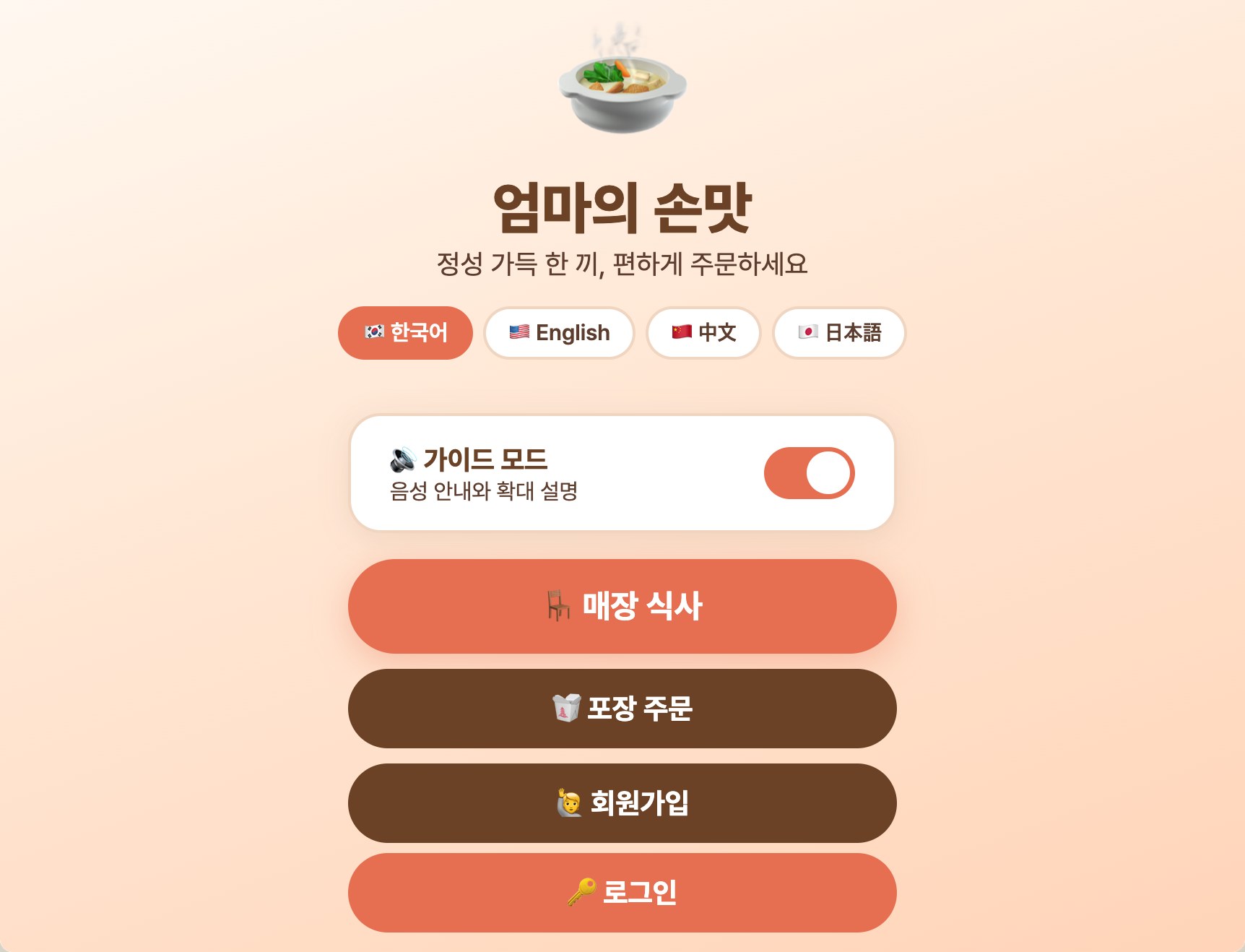
엄마의 손맛
4 students
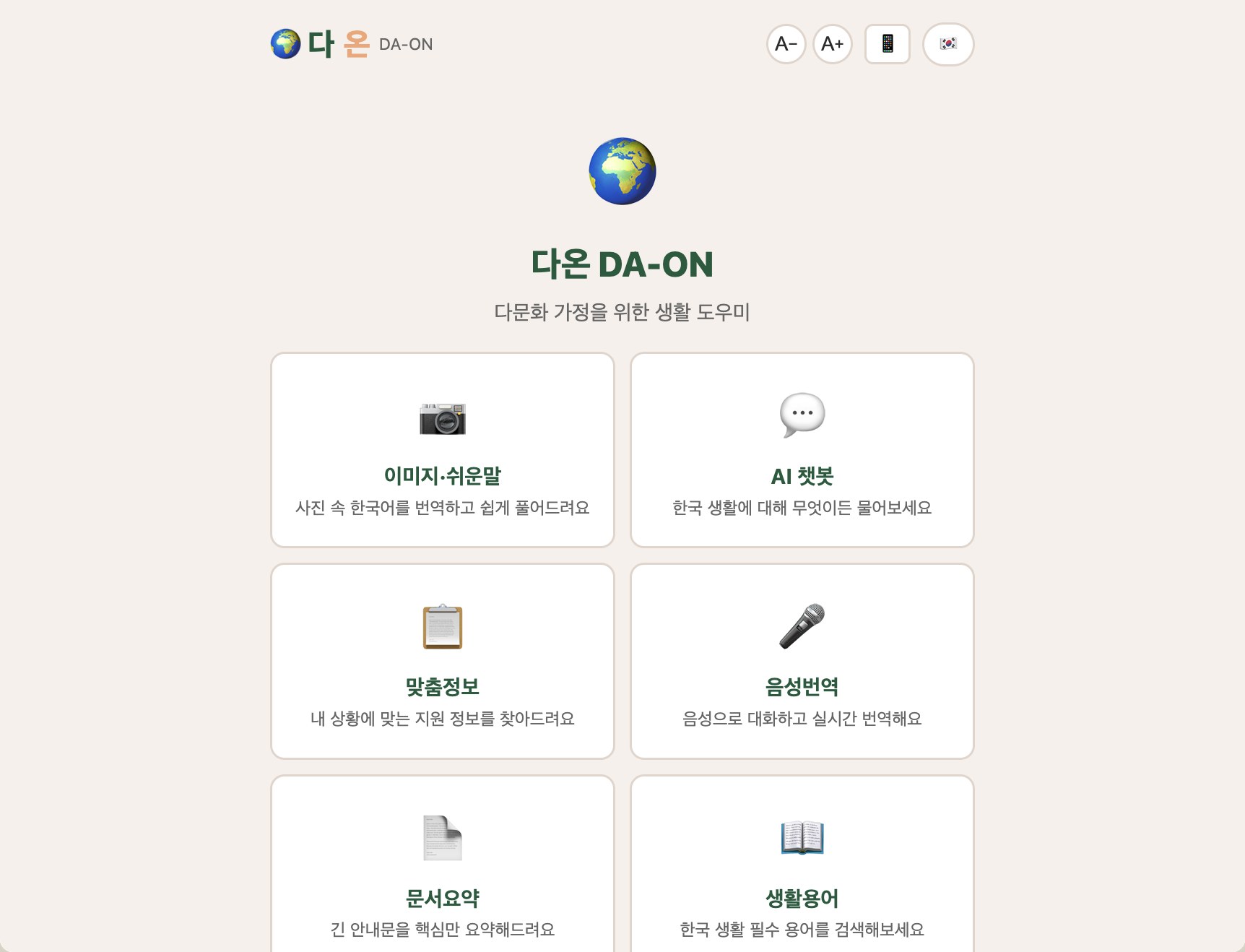
다온 DA-ON
1 student
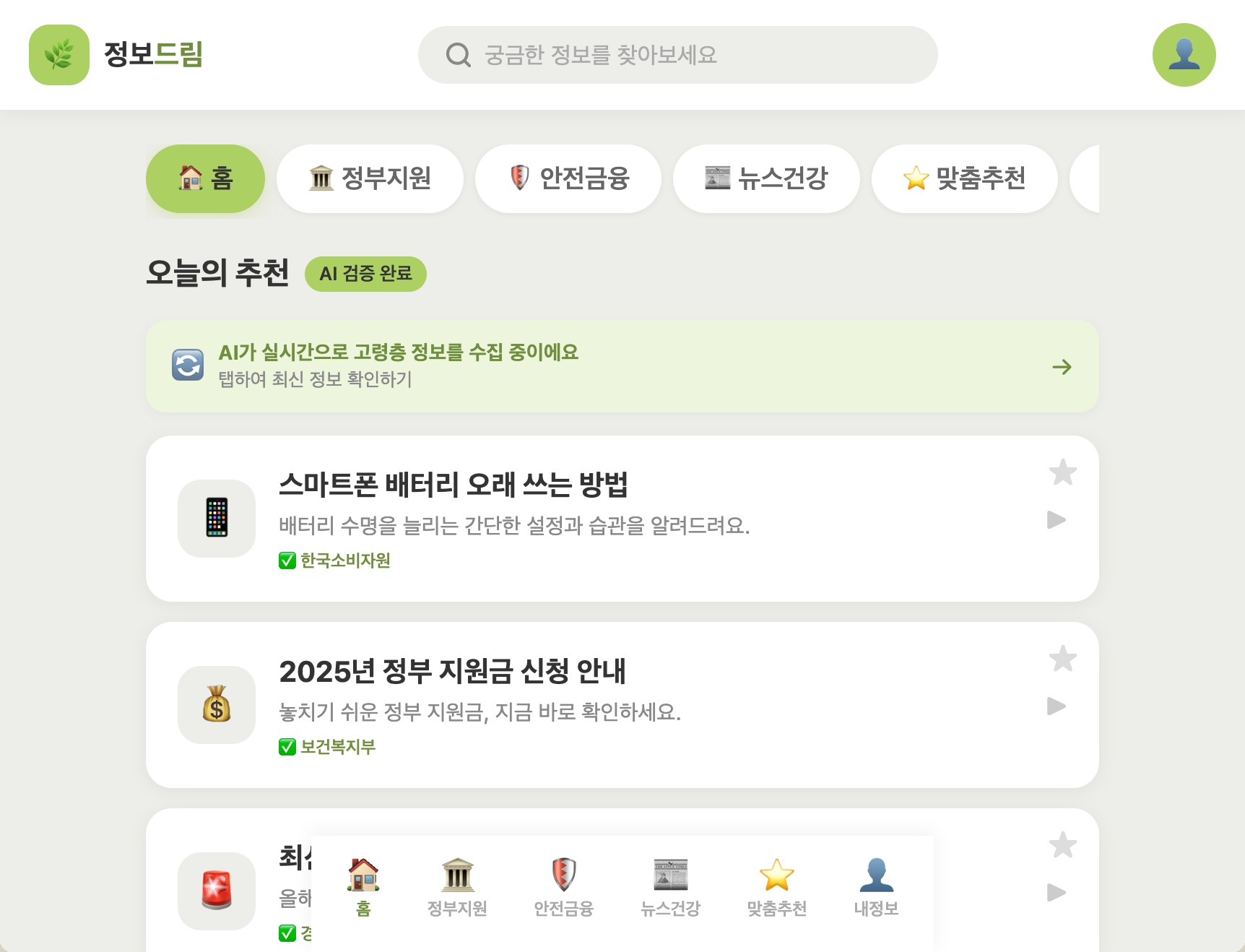
정보드림
3 students
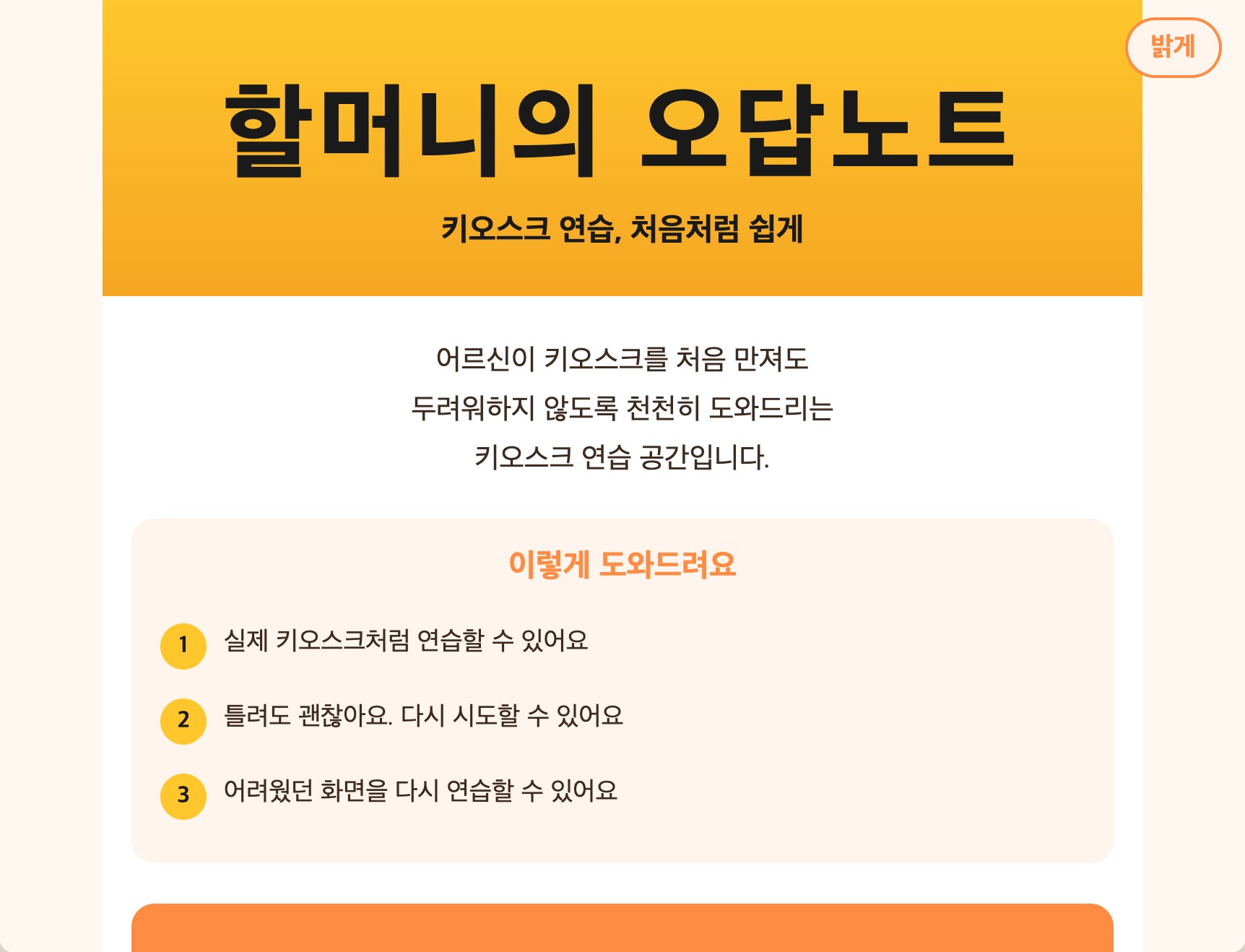
할머니의 오답노트
2 students
모도리
2 students
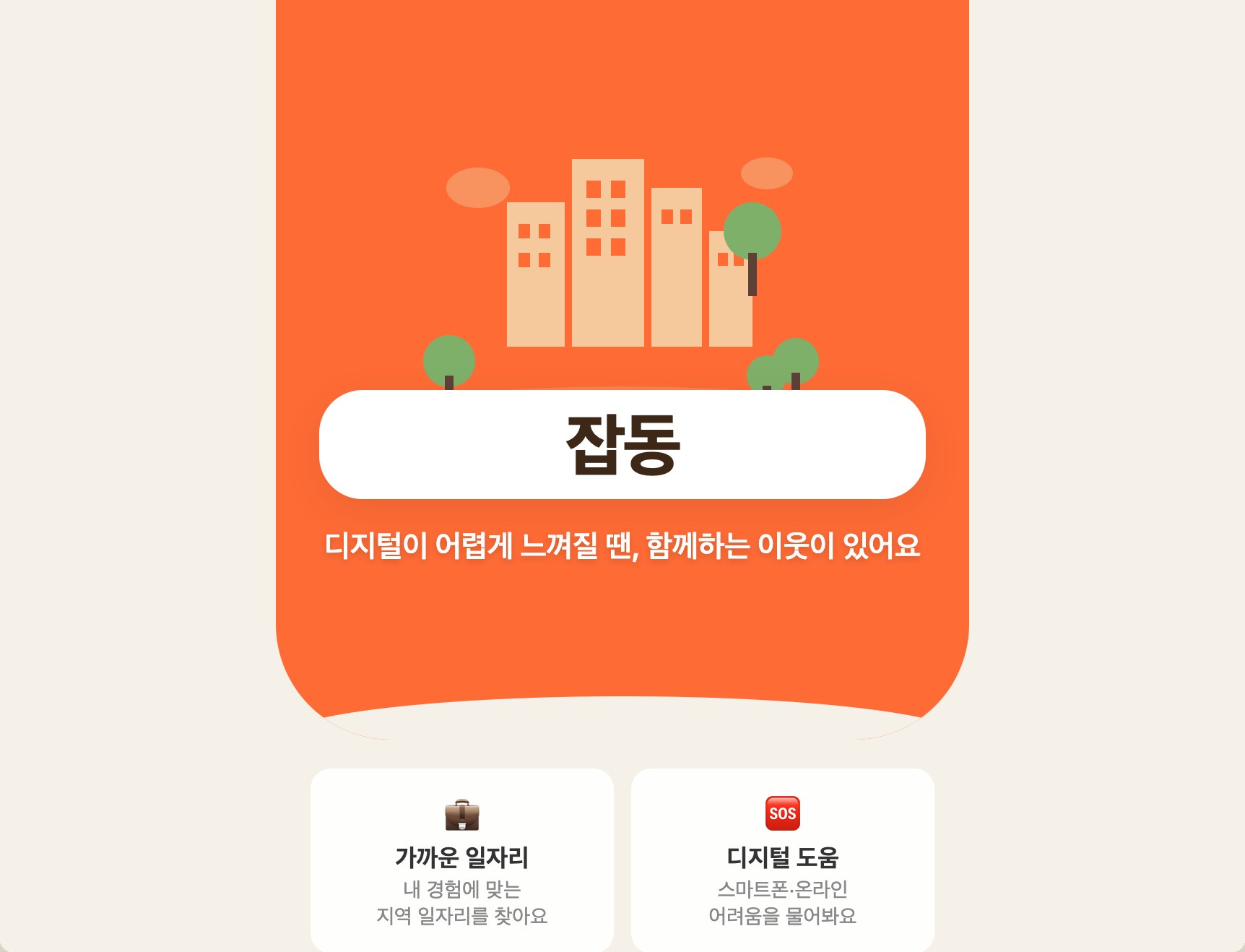
잡동
1 student
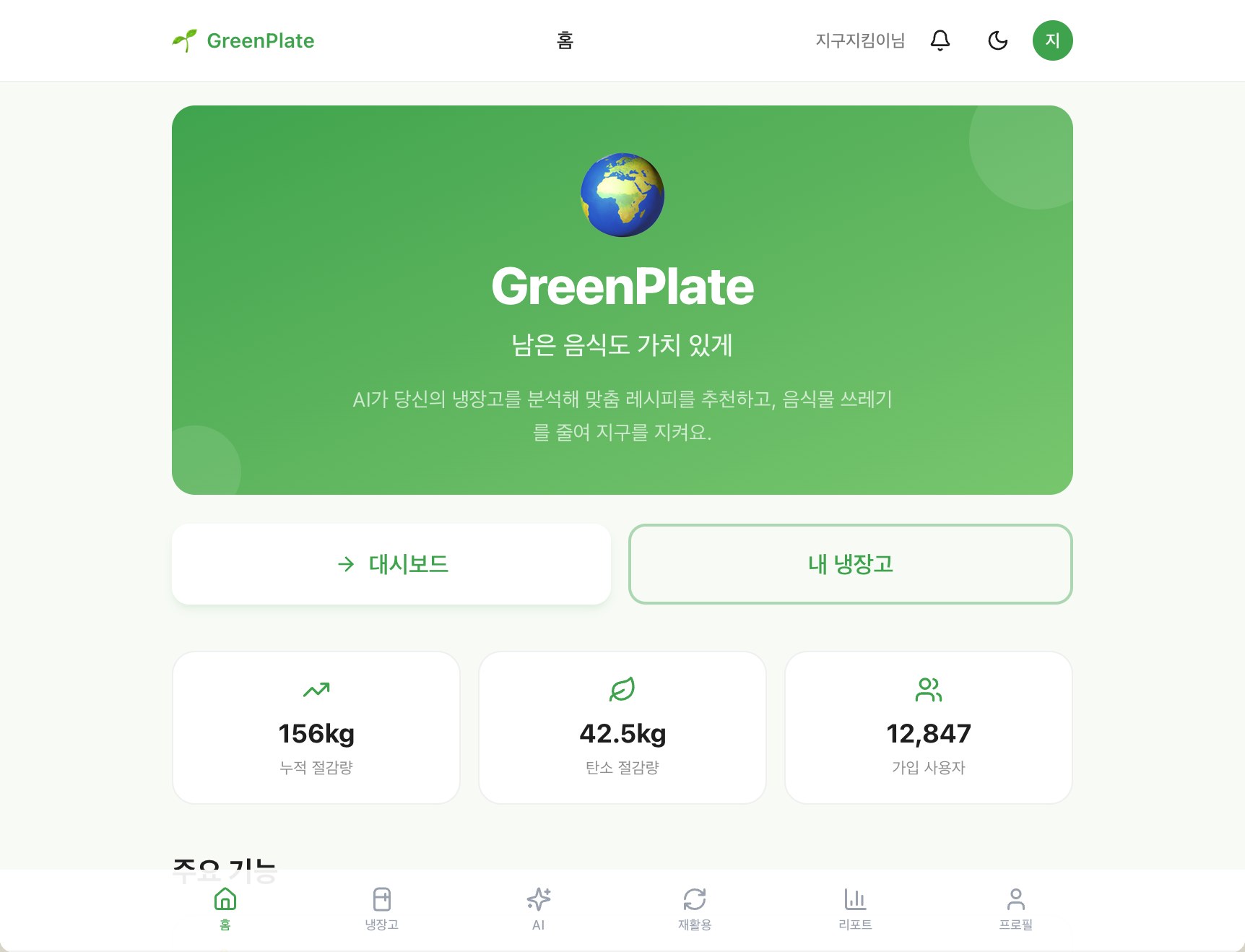
GreenPlate
2 students
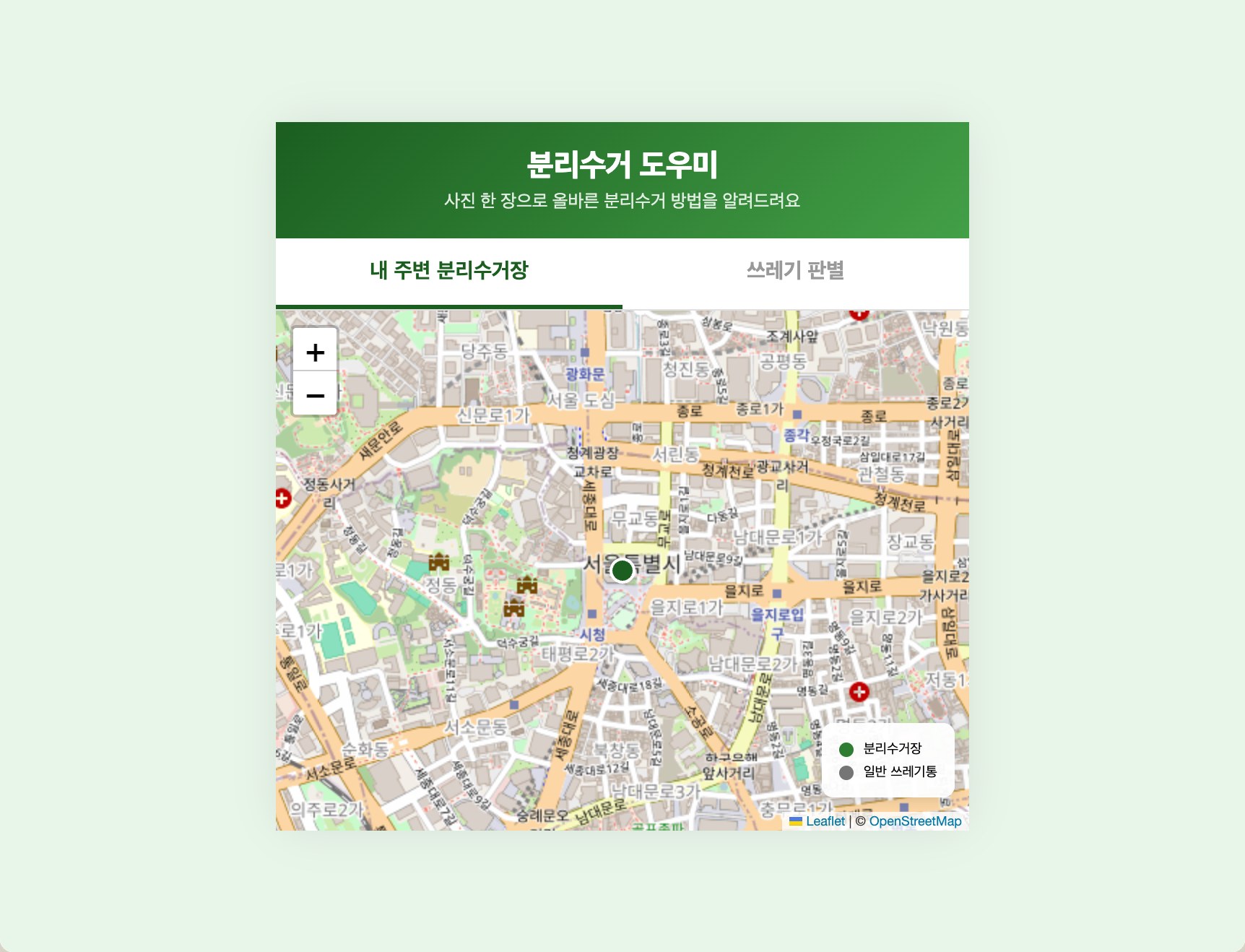
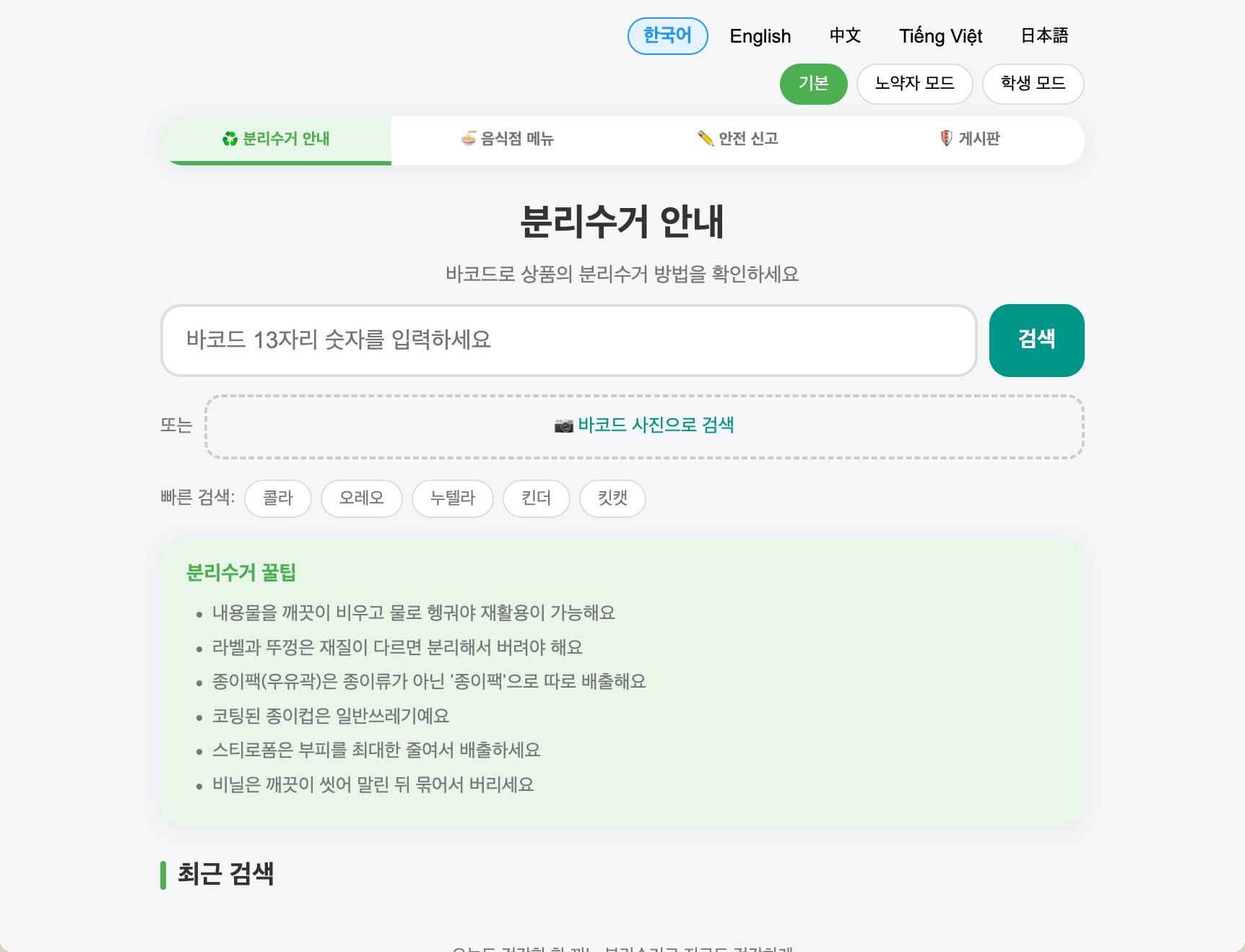
분리수거 도우미
2 students
똑똑한 분리배출
2 students
안전귀가 CCTV
1 student
런데이
2 students
고령층 디지털 기기 교육
2 students
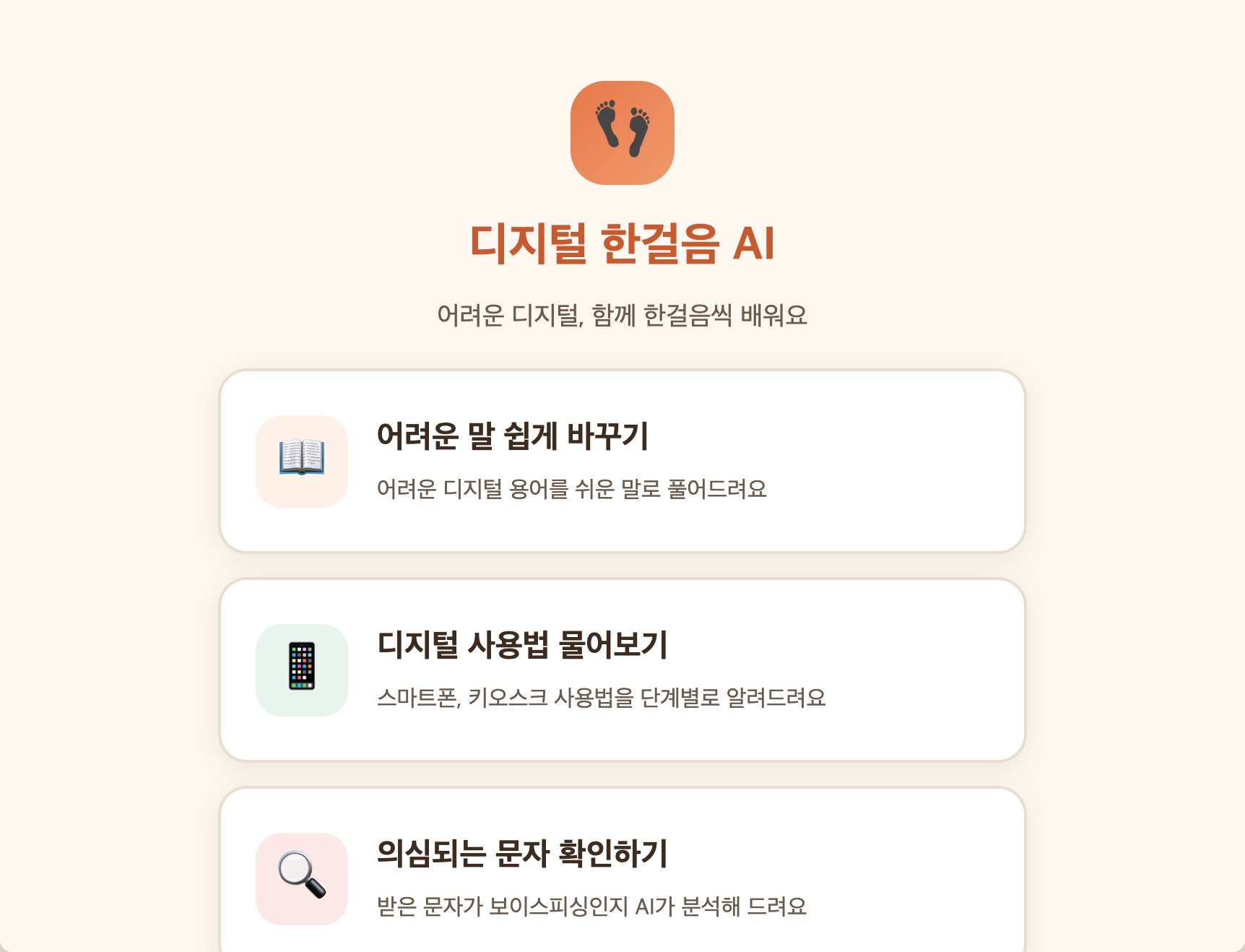
디지털 한걸음 AI
3 students
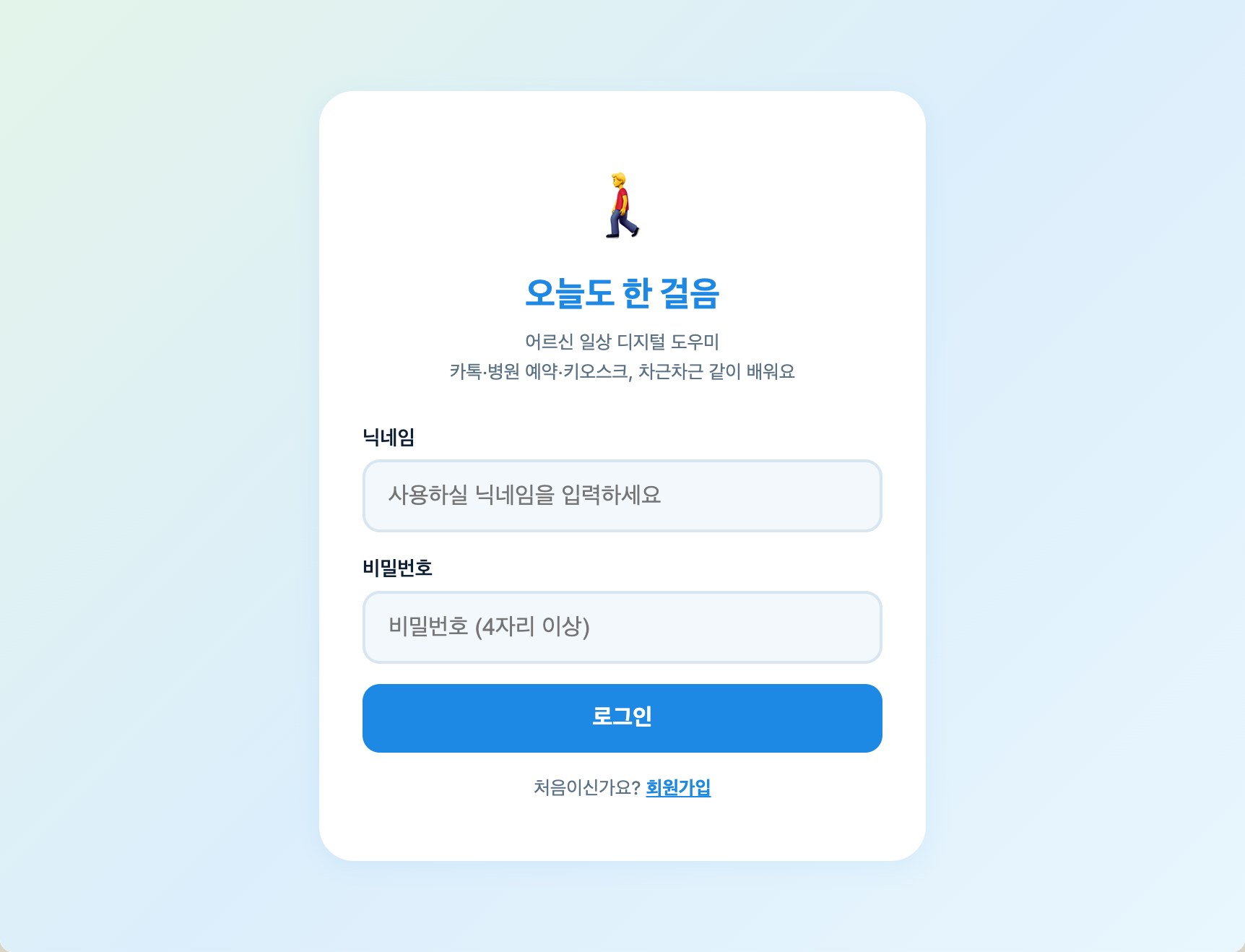
오늘도 한 걸음
4 students
스쿨워커스
3 students
잡다한 것
3 students
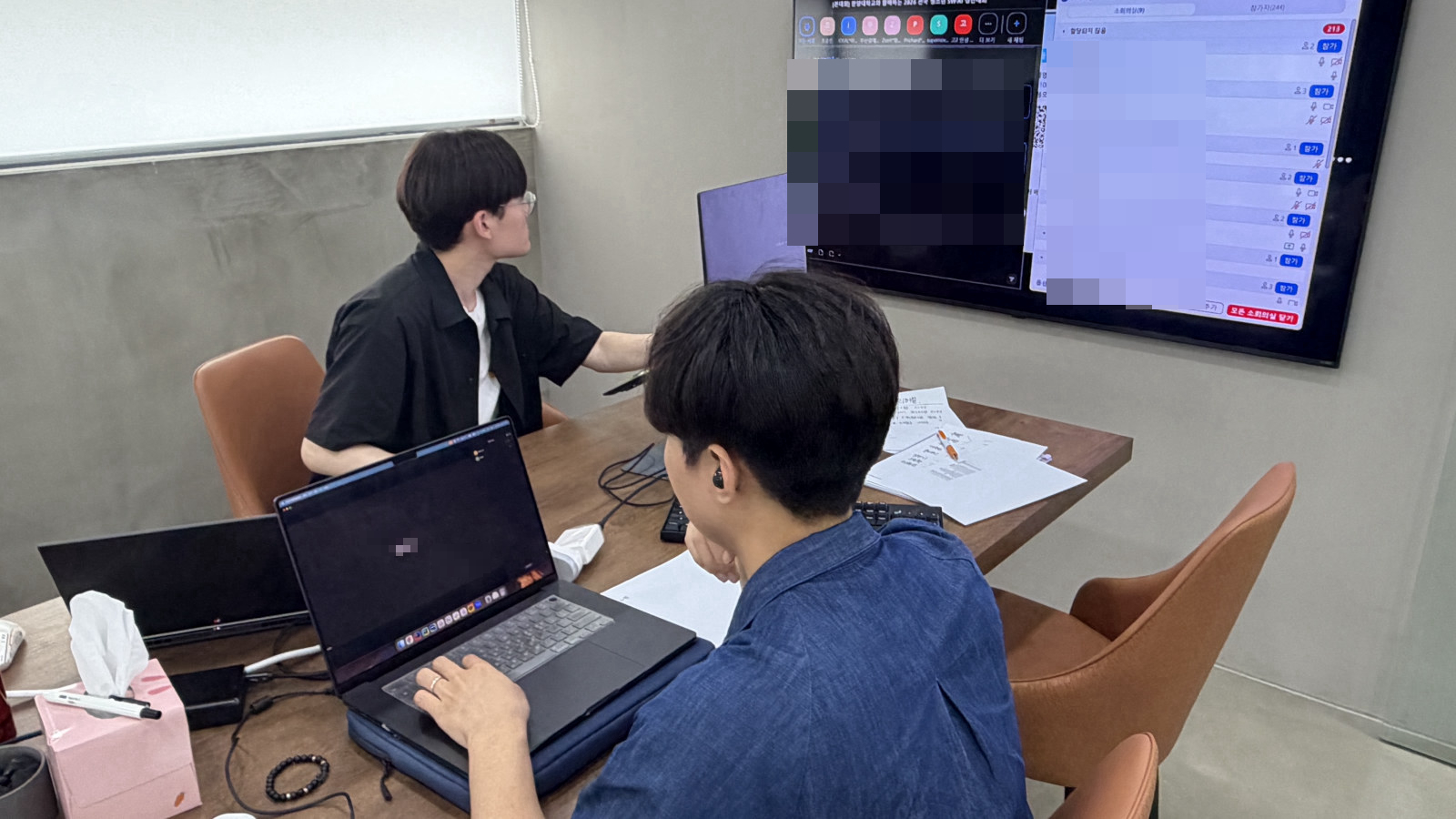
The control room, where staff admit participants to the online hackathon
Interview

After the competition,
we heard from two of them.

These are the words carried in the official press release after the competition, from the program that hosted it and from the students who took the grand prize.

DDirector of the Software-Oriented University ProgramHanyang University ERICA · competition host
GGrand-prize team ‘지지자’Yeoncho High School, Grade 1 · team of 2
QWhat did this competition confirm for you?
D
Director of the Software-Oriented University ProgramThis competition showed that young people can use generative AI not simply as a tool that produces answers, but as a collaborative partner in solving problems.
“Wherever they live and whatever their circumstances, we will keep widening
the chances for every young person to build SW and AI skills.”
Director of the Software-Oriented University Program
QWhat did you want to put into ‘모두의 한끼’, your grand-prize project?
G
Grand-prize team ‘지지자’We built in ingredient selection and a control for what the user values, so people can use up what is in the fridge and cut their carbon emissions. We hope a small idea can add up to more sustainable eating.
“We want to build on this experience and become a team that thinks about more worthwhile AI and software.”
Grand-prize team ‘지지자’
When Bana runs it
The host sets the name and the direction,
and Bana runs it at national scale.

What Hanyang University ERICA decided was the name and the direction of the competition.
Bana ran four months of the work: nationwide recruiting, pre-training, watching over the overnight build, mentoring, three-stage judging, and the results announcement.

Nationwide recruiting and operations

Bana designed it all, from recruiting more than 2,000 students across 14 provinces and metropolitan cities to team assignments and the schedule.

Live monitoring, online

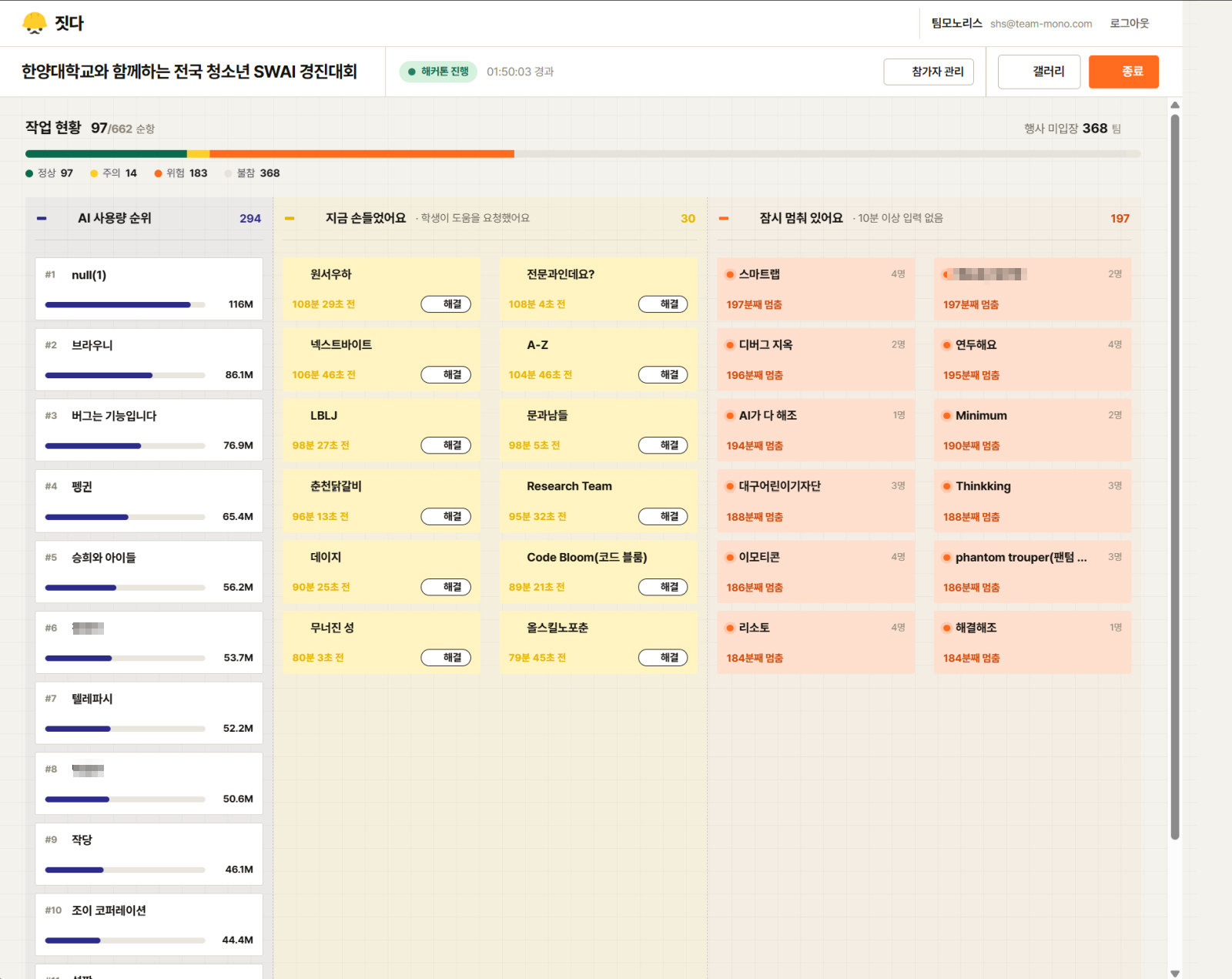
A single Bana dashboard showed how all 2,000 were doing in real time, and we sat through the all-nighter with them.

Support for three-stage judging

From AI pre-screening through expert scoring, final review, and the results announcement, we backed the judging process with data.

Work published automatically

When the competition ends, every team’s project goes straight to the gallery, and entrants from across the country open each other’s work.
The control room that day

Twenty hours on the other side of the screen, keeping watch over 2,000 students

Running the opening ceremony, monitoring 2,000 people live, assigning mentors through the night.
This is how it went from Saturday afternoon to Sunday morning.

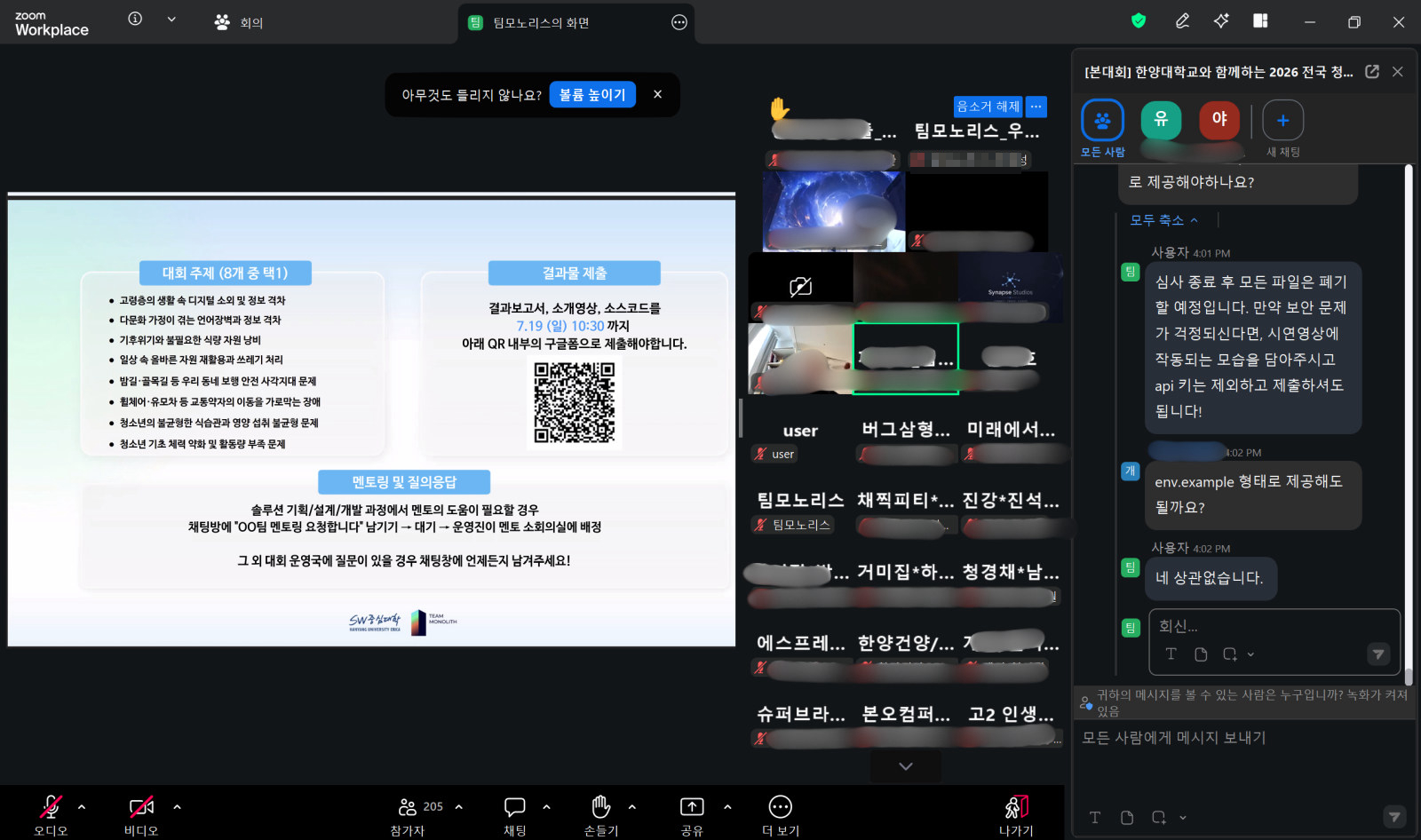
The Zoom opening ceremony screen revealing the eight competition topicsTopics revealed
The Bana dashboard showing the progress of teams across the countryLive monitoring of 2,000
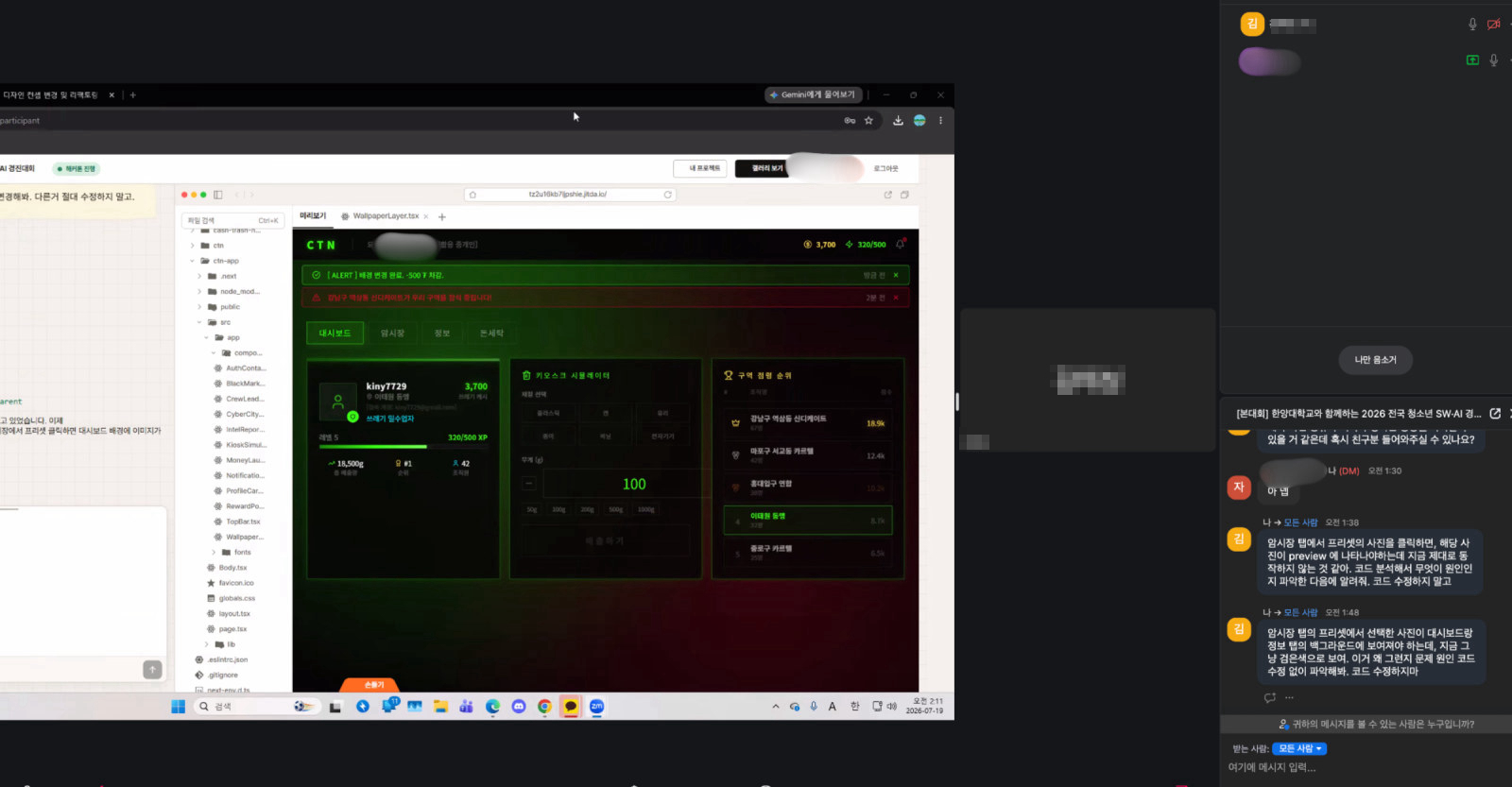
A mentor screen-sharing to look at a student team’s app with themMentoring through the night
Staff checking participants into the Zoom waiting roomAdmissions
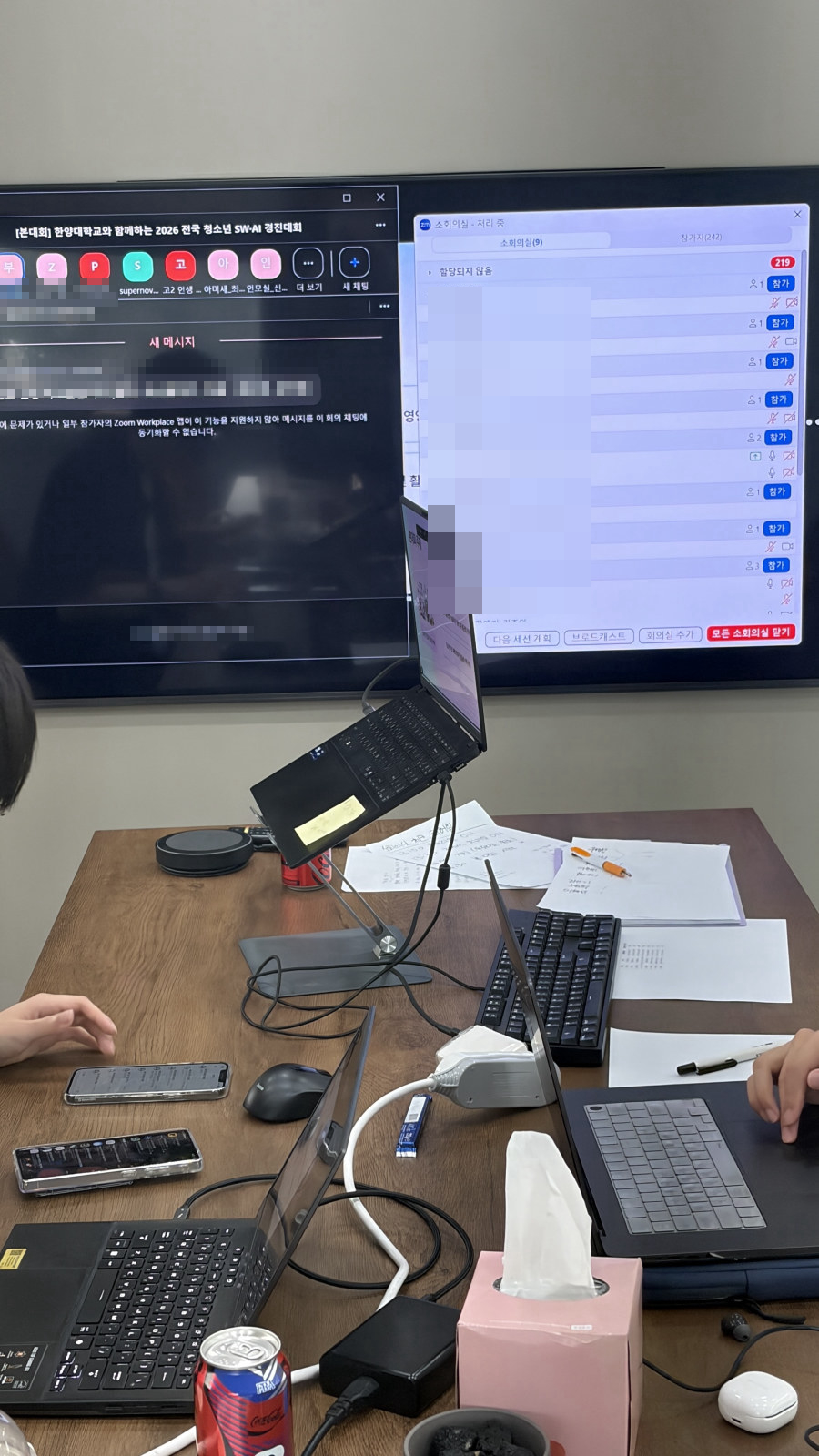
The operations screen where breakout rooms are opened and teams assigned to mentorsMentor breakout rooms
The control room, with staff watching progress on a large screenInside the control room
FAQ

Frequently asked questions about this case

How did the Hanyang ERICA National Youth SW·AI Competition run?
Recruitment ran from late March to early July, and the pre-training on July 4 was held live and recorded. After topics were revealed at the opening ceremony at 14:00 on July 18, teams built overnight for 20 hours and submitted a report, an intro video, and source code by 10:30 on July 19. Three rounds of judging ran from July 20 to 26, and 13 winning teams were announced on July 27.
Can students who are new to vibe coding take part?
The pre-training covered AI literacy, prompting, and vibe coding, and was offered both live and as a recording. Because you describe the app you want to the AI, you can start without experience writing code yourself. Students from any region and any school took part under the same conditions.
What kinds of apps did participants build?
Each team picked one of 8 topics covering digital exclusion among older adults, climate crisis and resource waste, mobility for people with limited mobility, and youth health. The works list on this page includes ‘모두의 길’, a route map for people with limited mobility, ‘RE:CYCLE AI’, a recycling helper, ‘GreenPlate’, a food ingredient management platform, and ‘엄마의 손맛’, a multilingual voice kiosk.
What does a host need to prepare?
The name and direction of the competition. Bana ran everything else, from nationwide recruitment, pre-training, overnight build monitoring, and mentoring to three rounds of judging and the results announcement. To hold a competition at your organization, contact us through the form at the bottom of this page.
Contact us

A national-scale competition too,
Bana builds it with you.

Competition or event, tell us the goal and the scale and we will design the whole operation.
Leave your details and we will be in touch quickly.

What you send is used only to follow up on your inquiry.
Curious about the other events we have run? Browse more case studies